


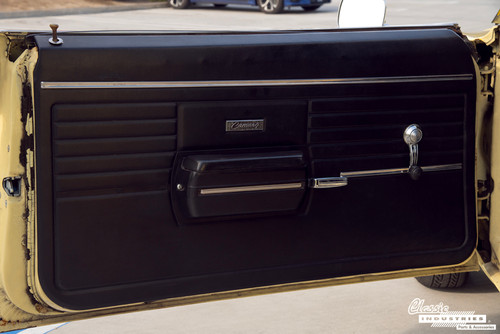
Family Ties: Charles Williams’ 1968 Chevrolet Camaro
Posted by D. Brian Smith on Sep 4th 2026

Some classic cars are bought because they’re valuable. Others are chosen because they’re fast, rare, or simply the car someone has dreamed about owning since childhood. Then there are cars whose value can’t really be measured in dollars at all.
Charles J. Williams’ 1968 Chevrolet Camaro falls squarely into that last category.
This first-generation Camaro is a family car, passed down with the intention of keeping it in the family. That connection gives Charles’ Chevy something no catalog of options or list of specifications could ever duplicate - history.

Of course, sentimental value doesn’t mean a classic has to spend its life tucked away in the garage. Charles’ Camaro combines that family history with the kind of V8 power and smart upgrades that make a vintage Chevy even more enjoyable from behind the wheel.
And Charles has certainly put that drivability to the test.
A First-Gen Camaro with Stroker Power

The 1968 Camaro occupies a sweet spot in Chevrolet performance history. It retained the clean, compact proportions that made the original Camaro an instant favorite while receiving subtle styling changes that distinguish it from the inaugural 1967 model.
Charles’ example builds on that classic formula with some serious small-block muscle under the hood.
Power comes from a BluePrint Engines 383 stroker small-block Chevy. Behind it is a 700R4 automatic transmission, giving the Camaro a drivetrain combination that brings together two qualities enthusiasts appreciate: traditional V8 character and overdrive cruising capability. The tech sheet also notes the addition of disc brakes.
It’s a combination that suits a classic Camaro especially well. A 383 stroker keeps the powerplant firmly within the traditional small-block Chevy family while adding the displacement enthusiasts have long used to wake up street-driven muscle cars. Pairing it with a 700R4 adds another useful dimension, particularly when the road stretches well beyond the local cruise night.
In Charles’ case, well beyond is no exaggeration.
Louisiana to Los Angeles for Christmas

In December 2023, Charles climbed behind the wheel of his Camaro at home in Breaux Bridge, Louisiana, pointed its nose west, and set out for Los Angeles, California, where he planned to spend the Christmas holidays with his daughter, Kenya.
He made the drive in approximately 30 hours.
For any car, that’s a serious road trip. For a 1968 Camaro powered by a relatively fresh 383 stroker, it’s the sort of journey that says far more about a build than a few laps around town ever could.
Charles took a deliberately cautious approach along the way. Roughly every 100 miles, he stopped and topped off the Camaro’s fuel tank before continuing west. Stop by stop and mile by mile, the Louisiana-built family connection rolled toward Southern California.

The trip also put some meaningful miles on the Camaro’s new engine. When we photographed Charles and the car on January 19, 2024, the 383 had accumulated approximately 3,000 miles.
There’s something especially appropriate about that. This Camaro wasn’t transported to California in an enclosed trailer and unloaded for the cameras. Charles drove it there from Louisiana.
That cross-country journey reinforces what this car is really about. It may be a classic, and it may carry important family history, but Charles isn’t afraid to use it.
Updating a Chevrolet Icon
Charles has taken a similarly thoughtful approach to the rest of the Camaro, incorporating upgrades without losing sight of its unmistakable late-1960s identity.
Classic Industries has been part of that process. Among the components Charles lists are a radiator support and inner fenders, along with LED headlights and LED taillights.
The combination covers both sides of classic-car ownership.
Replacement components such as the radiator support and inner fenders help keep the Camaro solid and looking right beneath the hood. The LED lighting, meanwhile, brings modern illumination to a vintage package while retaining the familiar appearance of the Camaro.
Those upgrades make even more sense in light of Charles’ willingness to rack up highway miles. Improvements to lighting, braking, and drivetrain usability aren’t simply items on a build sheet when a car is being driven across multiple states. They become functional improvements that help make a classic more enjoyable out on the open road.
That balance is one of the things that makes a well-planned street machine appealing. There’s no need to erase the character Chevrolet gave the car more than half a century ago. The right upgrades can simply make that character easier to enjoy.
The Value of a $2,000 Camaro
There’s another number on Charles’ tech sheet that immediately catches an enthusiast’s attention: $2,000.
That’s the purchase price listed for the Camaro.
Today, seeing “1968 Camaro” and “$2,000” in the same sentence is enough to make just about any Chevy enthusiast take notice. But focusing solely on what a first-gen Camaro might be worth today misses the larger point of Charles’ car.
This one was kept in the family.
For enthusiasts, that distinction matters. Cars can become rolling pieces of family history, accumulating stories alongside miles. They become associated with particular people, places, sounds, and moments. Eventually, the person holding the keys isn’t simply the owner. He or she becomes the caretaker of something that connects one generation to another.
And now another chapter has been added to this Camaro’s history: a Christmas road trip from Breaux Bridge to Los Angeles, with Charles behind the wheel and a small-block Chevy rumbling away mile after mile.
Keeping the Camaro Tradition Alive

Above: That's Mr. Charles Williams standing next to his well-driven and well-cared for 1968 Chevrolet Camaro that he believes is painted Butternut Yellow. Mr. Williams is retired military. Thank you for your service, Mr. Williams. Helping to bring the Williams' family Camaro story to life was his daughter Kenya, who graciously filled out the CI tech sheet for her father.
More than five decades after Chevrolet built the 1968 Camaro, first-generation F-bodies remain some of the most recognizable American performance cars ever produced. Their straightforward mechanical layout, handsome proportions, and enormous performance potential have allowed owners to take them in almost any direction imaginable — from factory-correct restorations to Pro Touring machines and old-school street bruisers.
Charles Williams’ Camaro follows its own path.
The BP383 stroker provides the heart of a traditional Chevy street machine. The 700R4 adds the benefit of overdrive. Disc brakes add stopping capability, while LED headlights and taillights bring modern lighting technology into the equation. Classic Industries radiator support and inner-fender components help preserve the foundation surrounding those upgrades.
Individually, each modification makes the car a little better. Together, they support a much bigger objective: keeping a meaningful 1968 Camaro on the road and in the family.
And Charles has demonstrated that “on the road” doesn’t just mean an occasional Sunday cruise.
Driving a 1968 Camaro from Louisiana to Southern California is the kind of experience that reminds us why these cars are worth preserving in the first place. They were built to move. They were built to be driven. And decades later, with the right combination of restoration work and carefully selected upgrades, they can still turn a long stretch of interstate into part of the story.

A classic doesn’t have to remain frozen in time to preserve its history. Sometimes preserving it means giving the car what it needs to continue being driven, enjoyed, and passed along.
For Charles Williams and his 1968 Camaro, that family history now includes a 30-hour run from Louisiana to Los Angeles — with a 383-cubic-inch small-block providing the soundtrack.
We can think of few better ways to celebrate Christmas with a classic Camaro.
Parts Unlimited Interiors - Interior Items for Your Camaro
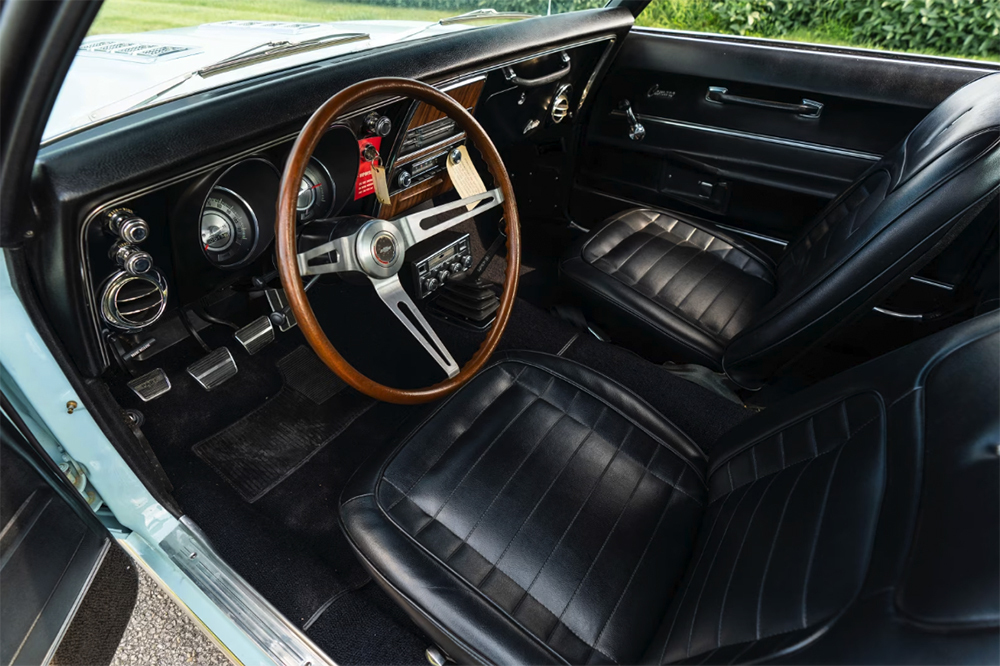
Though we're certain that Mr. Williams had a blast driving his 1968 Camaro from Louisiana to California for Christmas, we know it would have been even more fun with a renewed interior from Parts Unlimited Interiors.
