
Bob Bates' 1956 Chevy Delray: A Resto-Mod Masterpiece for the Open Road
Posted by Parts Unlimited Interiors News on Sep 3rd 2026
 Some classic cars spend their lives traveling from the garage to the show field and back again. Bob Bates’ 1956 Chevy 210 Delray isn’t one of them. This '56 was built to cover miles, and with six trips down historic Route 66 already under its belt, it has certainly lived up to that purpose.
 The Delray occupied an interesting place in Chevrolet’s 1956 lineup. Offered as a distinctively trimmed version of the 210 series, the Delray combined the more affordable 210 platform with an upgraded interior and additional trim. Chevrolet produced 56,882 210 Delray club coupes for the 1956 model year. Today, the model provides an ideal foundation for a resto-mod like Bob’s — retaining all the unmistakable styling of a ’56 Chevy while leaving plenty of room for modern performance, comfort, and drivability.
Bob summed up the car’s restoration in just a few words: “Every nut & bolt touched from ground up.” The Delray was transformed into a resto-mod more than 20 years ago at Harold Davis’s Hot Rod Shop in Stanton, California. According to Bob’s build sheet, the project took approximately two years to complete, with an estimated total investment of $66,000.
The Right Place at the Right Time

Like many memorable classic-car stories, Bob’s ownership of the ’56 began with good timing.
Harold Davis had poured his experience and abilities into building the Delray, but eventually another Chevrolet was calling his name, his 1953 Chevy sedan delivery. When Harold decided to move on from the ’56 so he could focus on the ’53, Bob had the opportunity to become the Delray’s next caretaker.
“I was in the right place at the right time,” Bob wrote.
He has owned the Chevy for several years since then, making a handful of changes to suit his taste while preserving the character of the original resto-mod build. More importantly, he has continued using the car exactly as intended. Bob says he drives it every chance he gets.
That philosophy is apparent throughout the Delray. Rather than chasing maximum horsepower or building a car that is happiest sitting on display, its combination of upgrades emphasizes comfort, reliability, highway cruising, and classic 1956 Chevy style.

Small-Block Power and Overdrive Cruising
Under the hood is a Chevrolet 350 cubic inch small-block V8 with Edelbrock equipment. An MSD ignition system helps light the fire, while headers and a performance exhaust system let the small block breathe.
Keeping the engine cool on long trips is a Matson radiator backed by dual 10-inch electric fans. Vintage Air adds another welcome concession to modern comfort, especially when the Delray is being driven through the Southwest rather than sitting beneath a show tent.
Behind the small-block is a GM 700R4 four-speed automatic transmission with lockup. The overdrive transmission is particularly well suited to the way Bob uses this car, allowing relaxed highway cruising while still providing the response expected from a V8-powered resto-mod.
Power travels through a stock driveshaft to a 10-bolt rear axle with approximately 3.73:1 gearing. An Optima battery has been relocated to the trunk.
Down Low

The Delray retains its stock frame and 114-inch wheelbase, but its stance is anything but stock.
Bob’s notes indicate the front of the car has been lowered approximately five inches through a combination of dropped spindles and suspension modifications. The rear sits even lower, with approximately six inches of drop and lowering blocks noted in the build information. KYB shocks help control the lowered suspension.
 The result is a long, low profile that complements the flowing lines of the ’56 Chevy without turning the car into something too precious to drive.
Filling the wheel openings is a staggered set of Foose wheels measuring 17x7 inches up front and 18x8 inches at the rear, wrapped in Michelin rubber. The combination adds a contemporary touch without overwhelming the Delray’s unmistakably 1950s proportions.

Stopping power has also been upgraded for modern road use. CPP disc brakes reside up front, while drums remain at the rear. A 9-inch CPP power brake booster and braided brake lines round out the system. Steering duties are handled with ididit components.
Classic Style, Modern Comfort
The exterior retains the brightwork that makes a mid-’50s Chevrolet instantly recognizable. The grille, bumpers, emblems, and trim have been rechromed. The lights and mirrors retain a stock appearance.
The body wears a deep two-tone combination accented by a black top — one of the changes Bob made after acquiring the car. The contrast gives the Delray a slightly more contemporary personality while allowing the original Chevrolet lines and chrome to remain the visual focus.

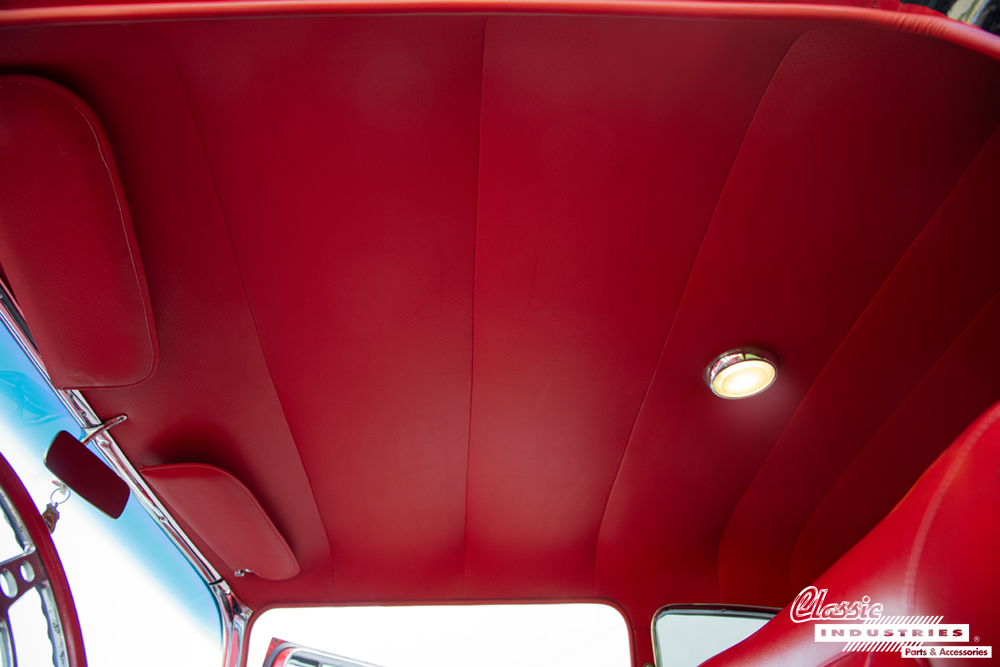
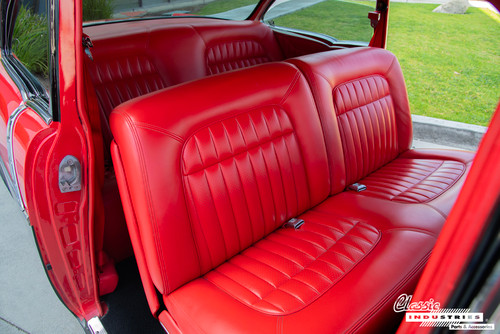
Inside, the same traditional-meets-modern theme continues. A bench seat keeps the cabin rooted in the 1950s, but tuck-and-roll leather upholstery gives it the finish expected of a high-end resto-mod. Aftermarket gauges keep tabs on the mechanicals. The wiring has been replaced and an Ididit steering column incorporates the automatic shifter. A compact aftermarket steering wheel completes the driver’s side of the cabin.
The fuel system has also been updated, with Holley equipment and what Bob’s build sheet identifies as a 25-gallon aluminum CPP fuel tank — another modification that makes sense for a car intended to cover serious distances.

Six Times Down Route 66
For all the hardware underneath it, the most revealing specification on Bob’s Delray may not be found by inspecting it top to bottom and going for a test drive.
It has traveled Route 66 six times.

That single detail says more about the car than a horsepower number ever could. Bob’s Chevy is polished enough to draw a crowd, extensively modified enough to satisfy a hot rodder, and comfortable enough to point toward the horizon and keep going.
It’s also a fitting continuation of the philosophy behind the original build. Harold Davis built the Delray for long-distance driving. When his attention turned toward his 1953 Chevy Sedan Delivery, Bob stepped in and became the caretaker of the ’56 — and he has continued putting it to use rather than retiring it from the road.
More than two decades after the resto-mod was completed, the Delray is still doing exactly what it was built to do.
 Bob puts it more simply: he drives it “every chance I get.”
And for a classic Chevy built to see America from behind the windshield, that may be the best ending to the story.
Interior Renewal Components for Your Tri-Five Chevrolet Are Available @ Parts Unlimited Interiors

Whether you're renewing, resto-modding, or maintaining your 1955-1957 Chevy, you'll find some great interior parts and accessories at Parts Unlimited Interiors. Should you specifically have a 1956 Chevy 210, don't be shy.