


1973 Chevy C30 Dually and Cheyenne: Specs, Trims, and Restoration Guide
Posted by News Desk 41 on Aug 7th 2026
 The 1973 Chevrolet C30 represents a major engineering shift in the history of Chevy trucks. Serving as the launch year for the third-generation "Square Body" (officially named the "Rounded-Line" series by General Motors), the 1973 C30 delivered significant upgrades in aerodynamics, chassis durability, and passenger comfort. For classic truck owners, restoration shops, and heavy-duty vehicle enthusiasts, understanding the specific technical specifications of the 1973 model year is critical.

General Motors utilized specific alphanumeric designations to categorize its pickup trucks. The "C" designates a two-wheel-drive platform, while "K" indicates four-wheel drive. The "30" series denotes a one-ton weight rating. Therefore, a 1973 C30 is a one-ton, two-wheel-drive heavy-duty truck. This platform sits above the half-ton C-10 and three-quarter-ton C20 models, offering maximum hauling and towing capabilities for the era.
The introduction of the C30 dually configuration—featuring dual-rear-wheel (DRW) axles—provided unprecedented stability for heavy payloads. This made the 1973 C30 dually the definitive workhorse for commercial applications, including wrecker, flatbed, and heavy hauler configurations. General Motors also introduced the "3+3" Crew Cab in 1973, making the C30 one of the first factory-built full-size trucks capable of seating six adults comfortably while retaining a full eight-foot cargo box.
1973 Chevy C30 Engine Options and Powertrain Specs

Above: The heavy-duty engine for the 1973 C30 dually is the 454 cubic inch V8 mill. Working hard, towing fast, or towing for pleasure roadtrips is no problem at all for the GM 454 big-block V8.
Understanding what engines were available in the 1973 Chevy C30 is essential for verifying matching numbers, sourcing correct replacement parts, or planning a powertrain swap. General Motors offered five distinct engine options for the 1973 C30 chassis, ranging from reliable inline-sixes to massive big-block V8s.
Engine Specifications
- 250 Cubic-Inch Inline-6: The base engine for standard C30 models. It featured a single-barrel Rochester carburetor, producing 100 net horsepower and 175 lb-ft of torque.
- 292 Cubic-Inch Inline-6: The heavy-duty six-cylinder option. Equipped with a heavier forged steel crankshaft and a larger single-barrel carburetor, it produced 115 net horsepower and 215 lb-ft of torque.
- 307 Cubic-Inch V8: The base V8 option, utilizing a two-barrel carburetor to produce 115 net horsepower and 205 lb-ft of torque.
- 350 Cubic-Inch V8: The most common mid-tier engine. Available with a four-barrel Rochester Quadrajet carburetor, it delivered 155 net horsepower and 255 lb-ft of torque.
- 454 Cubic-Inch V8: The premier heavy-duty engine for the 1973 C30 dually. This big-block V8 produced 240 net horsepower and a massive 355 lb-ft of torque, making it the primary choice for towing and heavy payload operations.
Transmission and Drivetrain Features
The 1973 C30 utilized robust transmissions designed to handle high torque output. The standard manual transmission was the heavy-duty Muncie SM465 four-speed, featuring a remarkably low 6.55:1 first gear (often referred to as a "granny gear") designed strictly for getting heavy loads moving from a dead stop. For automatic applications, Chevrolet equipped the C30 with the Turbo Hydra-Matic 400 (TH400), a three-speed automatic transmission renowned for its cast-iron center support and high clutch pack capacity.

Rear axles on the one-ton trucks were upgraded to handle massive payload requirements. Standard C30 trucks typically featured the Corporate 14-bolt full-floating rear axle with a 10.5-inch ring gear. The C30 dually models often utilized a heavy-duty Dana 70 dual-rear-wheel axle to accommodate the extra wheel mounting surfaces and manage the extreme gross vehicle weight rating (GVWR), which could exceed 9,000 pounds.
Trim Levels: What Makes a Chevy a Cheyenne?

When evaluating Chevy trucks from this era, interior and exterior trim packages dictate much of the vehicle's restoration value and part requirements. In 1973, Chevrolet restructured its trim hierarchy, introducing four distinct levels: Custom (base model), Custom Deluxe, Cheyenne, and Cheyenne Super.
Many buyers ask what makes a Chevy a Cheyenne, as the name carries significant weight in the classic truck community. The Cheyenne trim level served as the premium comfort package for 1973. It moved the C30 from a bare-bones utility vehicle to a passenger-focused truck.

Cheyenne Trim Package Features
- Interior Upgrades: The Cheyenne package replaced the standard rubber floor mats with full color-keyed nylon carpeting. The bench seat received upgraded vinyl or optional cloth inserts with heavy-duty foam cushioning.
- Acoustic Insulation: To reduce road noise, Cheyenne models featured additional sound-deadening materials under the floor pan, behind the door panels, and within the headliner.
- Dashboard and Instrumentation: Cheyenne interiors included full-gauge clusters (replacing basic warning lights), simulated wood-grain trim accents on the instrument cluster, and color-keyed door panel inserts with padded armrests.
- Exterior Brightwork: On the exterior, a Chevy Cheyenne featured extensive stainless steel molding. This included bright window trim, roof drip moldings, lower body side moldings, and tailgate inserts.

The Cheyenne Super stood as the absolute top-tier trim in 1973, adding more wood-grain accents, premium seat fabrics, and standard headliners. It is important to note that the Silverado trim did not become the top trim level until 1975. In 1973, the Cheyenne Super held the premium position in the lineup.

Part Fitment and Restoration Requirements
For shop professionals and DIY builders, fitment accuracy is the top priority when sourcing replacement sheet metal, trim, and mechanical components. The 1973 model year has several unique attributes that differentiate it from the 1974-1987 Square Body trucks. Ordering generic "73-87" parts will frequently result in incorrect fitment.
1973-Specific Body Components
The front fascia of the 1973 C30 features a unique recessed grill design. The center horizontal divider on the 1973 grill does not have the "Chevrolet" script stamped into it—a feature that was added in 1974. Additionally, the headlight bezels and front bumper brackets are specific to the 1973 and 1974 model years.

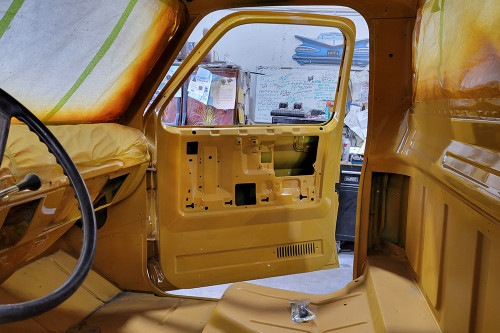
Door panel dimensions and window regulator mechanisms also differ. The 1973 doors feature a distinct internal stamping, meaning that interior door panels from a 1977 or 1982 truck will not mount correctly without modification.
Sourcing OEM and Reproduction Parts
When replacing rusted body panels—particularly the cab corners, rocker panels, and floor pans, which are notorious rust points on all third-generation Chevy trucks—quality matters. Builders should look for reproduction parts stamped from heavy-gauge steel. Manufacturers like Auto Metal Direct (AMD), Dynacorn, and OER produce officially licensed reproduction parts that match standard OEM specifications.
- Sheet Metal: Ensure replacement fenders, hoods, and bed sides are finished with an electro-deposit primer (EDP) coating to prevent corrosion before painting.
- Bed Configurations: The 1973 C30 was available as a Fleetside (smooth side) pickup, a Stepside pickup, or a chassis cab. If restoring a Fleetside dually, verify that the dual-rear-wheel fiberglass fender flares align correctly with the OEM bed side mounting holes.
- Suspension Components: Front suspension rebuilds require exact one-ton specifications. The lower control arms, ball joints, and massive front coil springs on a C30 are significantly larger than those on a half-ton C-10. One-ton dually front rotors also feature extended wheel hubs to accommodate the deep offset of the dually wheels.
Market Value and Modern Modifications

Determining how much a 1973 Chevy C30 is worth depends entirely on the vehicle's condition, cab configuration, and mechanical integrity. Standard single-cab work trucks with original patina and heavy wear represent the entry point of the market. These trucks often require extensive frame cleaning, cab support replacements, and engine rebuilds.

Clean, factory-correct Cheyenne and Cheyenne Super models command premium prices, especially if they feature the original 454 V8 and a rust-free Crew Cab configuration. Exact OEM restorations require meticulous attention to date-coded parts, correct two-tone paint separation lines, and original Delco electronics.

The Restomod and Hauler Market
The 1973 C30 dually has become highly sought after in the restomod and custom hauler communities. Because the one-ton frame is constructed from thick, high-strength carbon steel, it provides an excellent foundation for modern powertrain swaps.
Shop professionals frequently discard the original inline-six or standard V8 engines in favor of modern power plants. The heavy-duty chassis easily accommodates large diesel engines like the 12-valve or 24-valve Cummins, or modern Chevrolet Silverado 3500HD LS and LT series V8 engines.
 Upgrading a 1973 Chevy truck for modern towing involves replacing the original vacuum-assist drum brakes with four-wheel disc brake conversion kits powered by hydroboost systems. Suspension components are often updated with tubular control arms, heavy-duty sway bars, and airbag load-leveling systems to improve ride quality while maintaining the high payload capacity required for hauling classic cars to shows.
Whether executing a strict factory restoration utilizing OER authorized parts or building a high-horsepower custom hauler with modern Silverado performance parts, the 1973 Chevrolet C30 remains a definitive platform. By verifying exact trim specifications, engine codes, and correct sheet metal fitment, builders can ensure an accurate and functional build of this classic heavy-duty truck.

Parts Unlimited Interiors Chevrolet C30 Interior Items
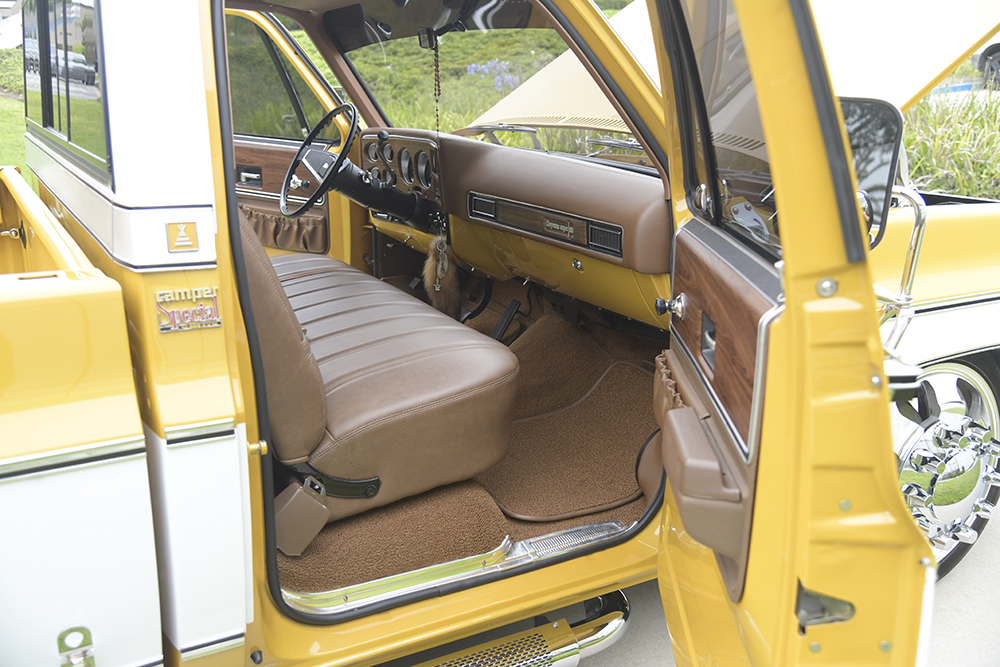
Regardless of whether you're renewing a short bed Stepside GMC or Chevrolet pickup, it's a fleetside long bed dually, or any other sort of configuration, Parts Unlimited Interiors has a great supply of GM pickup interior components. Chevrolet C30 truck owners can shop online for these items here.

